Golden Belt Campus is now a vibrant arts campus— it embodies Durham’s entrepreneurial spirit and the power of historic preservation to connect us with the past. The repurposing of the space has allowed the area to evolve into a “creative” space, blending the old with the new. The historical charm of the space is not just preserved but also celebrated in every corner of the campus.
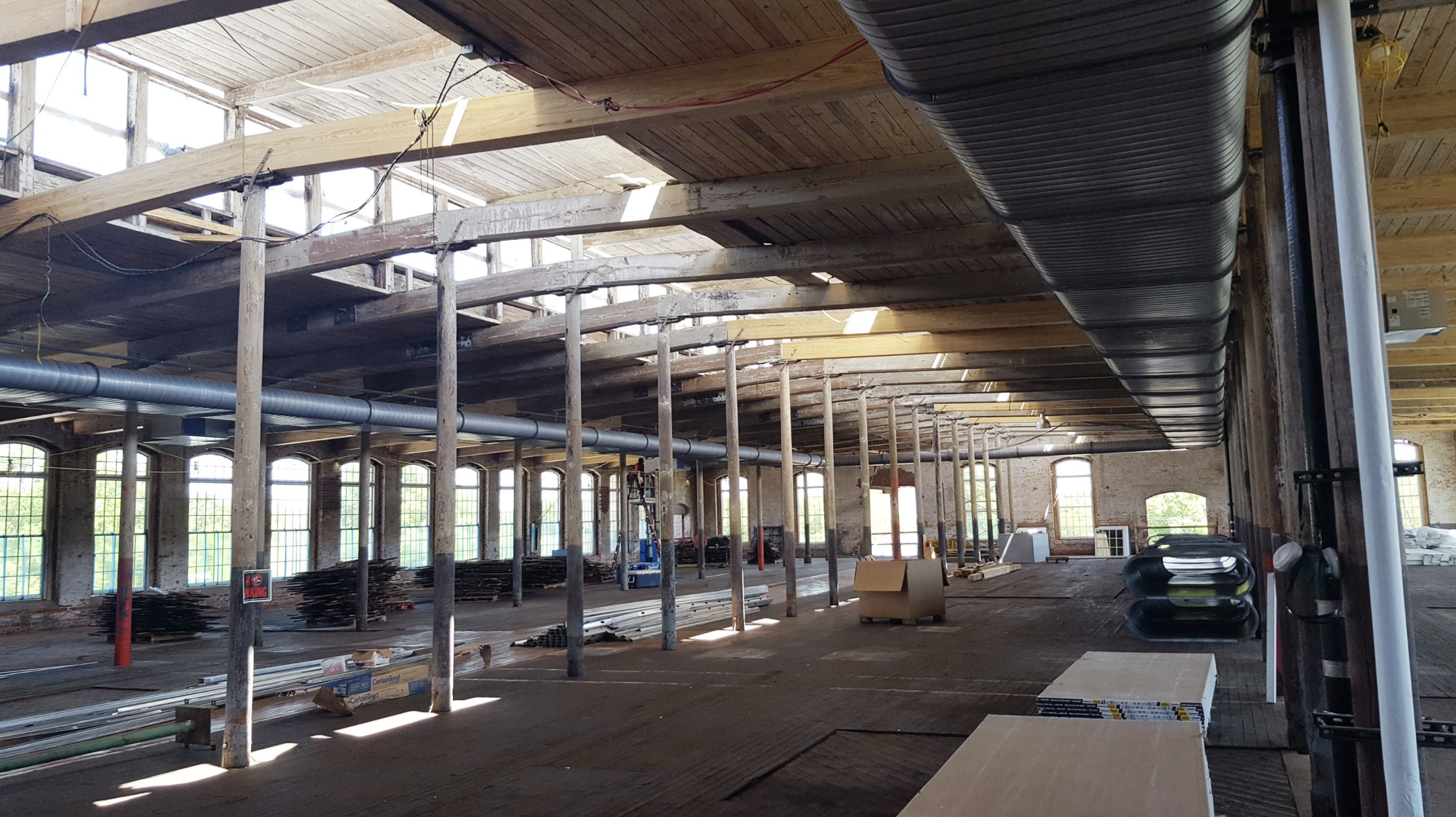
Due to the history of the campus, one gets these truly unique pieces and snippets of history incorporated into their everyday environment. When I stepped into Justin’s office, he showed me a slab of wood with a beautiful patina and nails embedded inside to symbolize this.
“This is what old wood looks like. You can see it. These are actually old floorboards from the mill. See these little metal things that are in there? These actually came off of textile rooms over there and had over a year or two of people walking on them; the nails were stomped into the floor. That’s the good stuff, right? ”
Justin Sacco, Golden Belt Landlord, Vice President of LRC Properties
John, the architect for the renovation, similarly expresses this value.
“The worst thing that can happen is you just let a demolition crew go wild in there, right? You need to go there and watch it and say, ‘no, no, no, save that.’You find things. They open a wall up and they find something. You’re like, oh, we gotta save that.”
John Warasila, founding principal of Alliance Architecture
Yet, at the same time, the creative spirit of Golden Belt is not just about the space; it’s about the people who occupy it. There is such an emphasis on the importance of art, in fact, that it became part of the very essence Justin Sacco aimed to create for the campus through its renovation.
What do you feel is the essence you tried to create at Golden Belt?
“ …The artists’ studios are here, not in the warehouse (we’ve got a theater in the middle of the warehouse). We’ve got the dance studios in Building 7. You know, John would argue that the chefs who work in our restaurants are creating art. There’s a lot of variation on that theme, and that’s kind of the essence. To me, it’s essential because you then have other people who are creating alternative energy projects, but they’re doing it in this sort of environment of creativity. There’s this real estate term. We’ll ask: well, what kind of space is it? Is it traditional? No, it’s creative. Most real estate people know what that means. It means you’ve got exposed beam, exposed duct, lots of light, maybe some brick, maybe some industrial metals… Having that sort of creative palette and then actually having artists—it just makes for a different overall project. That, I think, is really the essence of what we’ve got here.”
– Justin Sacco
Similarly, John Warasila of Alliance Architecture expressed the intentionality behind Golden Belt’s renovation design and its impact on the people coming to the campus.
Could you elaborate more on the intentionality behind Golden Belt’s renovation?
“What really excited me about it was, what if you had a campus where creativity was the idea? In all fields, and you mixed all those people up, right? Now I’ve got brewers bumping into botanists. I’ve got botanists bumping into painters. I’ve got painters bumping into people that are creating a solar energy industry. It’s this whole thing where now, at a big table, you’ve got people from all different areas and brain powers, just bouncing ideas off each other. How cool would that place be, you know? So that was the idea.”
– John Warasila
To what extent do you feel like artists have contributed to this sense of community and Durham?
Artists are usually the first people to sort of realize the value of these cool buildings (Golden Belt) and they have this proximity to one another. Everybody else then kind of starts to pick up on it, right? Before you know it, other people start to come in, rent goes up, and the artists aren’t there anymore. That’s the cycle that happens over and over and over again. So keeping artists here is important.”
– Justin Sacco
Another significant finding during my interviews with both Justin and John was how Golden Belt helped mitigate the stigma on the outskirting regions of the campus. This was one of John’s statements from before the renovation:
“One of the things about development in Durham is that the first place everyone goes is Duke, right? ‘We need Duke to be involved in this because, you know, they’ve got the big money.’ So, we had leadership at Duke come over and look at the campus, and they liked the buildings. They kind of listened. That day, we’re walking across the campus, we’ve done this whole pitch, and all of a sudden, you hear: “Pop! Pop! Pop! Pop!” and it’s a series of gunshots. I think someone said, ‘Oh, that was a car backfiring, you know?’ What came back to us as feedback was, well, a lot of people are too afraid to go to East Durham. We knew at that point Downtown and Duke were not ready for East Durham yet.”
John Warasila
And his thoughts on how the area has changed after the renovation:
“I think people at the end of the day are not very adventurous, or people are generally risk-averse. So until you see, ‘If they can do it, I can do it,’ people rarely want to be the early adopter. Giving the tenants who embraced it and went to the campus a lot of credit for being the early adopters, you can already see growth around that neighborhood. I mean, there’s been a lot more housing going in. You can even see the city investing in that quarter with housing, apartments, and retail. East Durham is definitely on the rise.”
John Warasila
Could you speak more about the community impact Golden Belt has? How do you feel it contributes to the area?
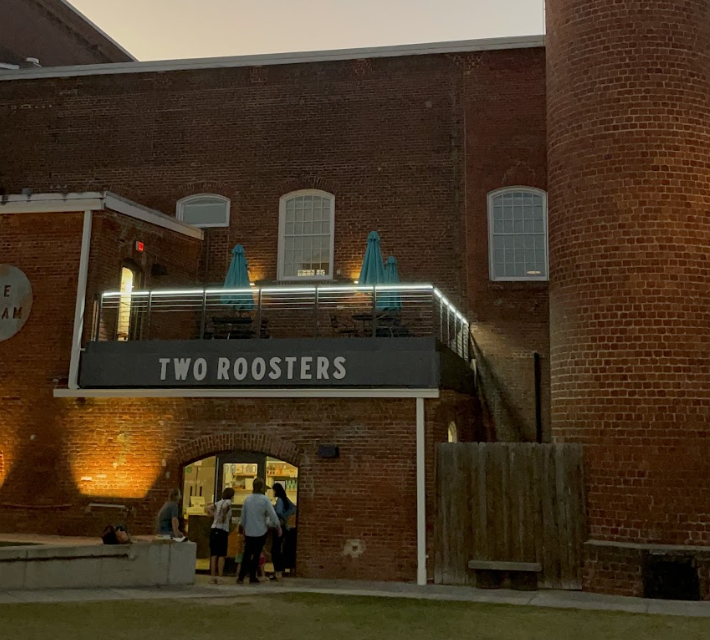
“It was really important to us to make sure that the plaza was not a place just for our tenants but was really open for everybody. We consciously tried to avoid putting on fences and gates. We had tons of parking, which also really helps—a lot of the projects downtown do not. So it’s allowed us to really bring things in. One of the groups that has really gravitated to this positive experience? Parents with young kids, which we didn’t script. I mean, that just happened. They saw the lawn. They thought, well, this is cool. My kids can run around, kick a soccer ball, I’ll have a beer, and then we’ll all have pizza together… and dogs. We have a veterinarian here, and the High Wire Brewing is dog-friendly. So having this sort of environment that doesn’t say, ‘no, you can’t do that,’ has helped us immensely.”
– Justin Sacco
To tie back to one of my questions using this lens:
1. How does architecture influence community/social dynamics and values?
The renovation Golden Belt has played a significant role both due to its interior design and due to its outward influence. The project highlighted the potential for growth in East Durham, changing social views of the area. Compared to taking on a more cautious approach to the area—as seen in the statement about the campus pitch— it is now met with a different open-mindedness. At the same time, however, the complexities of the effects of infrastructural development (although I don’t want to toss the term around, this is mainly speaking about gentrification) still stand, and while this renovation may have positively impacted the community by bringing people together and fostering creativity, it may simultaneously bring about adverse effects as it adds to Durham’s development.
 Deconstructing Durham