If you drive past Downtown Durham’s CCB Plaza after 6 PM on any given day, you’ll find the geometric brick-patterned floor buzzing with people. It’s incredibly walkable. Charming historic brick buildings dot across the streets. Offering a strong, diverse food scene, downtown residents descend from the apartment complex residencies and make their way around the area.
Just 1.1 miles away, there’s a similar scene on another open space: Golden Belt Campus. Sandwiched between a kind of holy trinity (pizza, ice cream, and beer) , people of all ages flock to the grassy field. Durham’s downtown region—and its surrounding environment— had once been dominated by the tobacco industry. Golden Belt, what had historically been an industrial textile mill for bagging loose-leaf tobacco, is now filled with art plastering its walls in a tall corridor.
“At night, it’s like you flip a switch and everything’s jammed. People now look at Durham as a destination for night. People that are in these apartments around Durham Central Park—that potentially work out of their home office or work remotely—they come down and they flow into the city.”
John Warasila, founding principal of Alliance Architecture
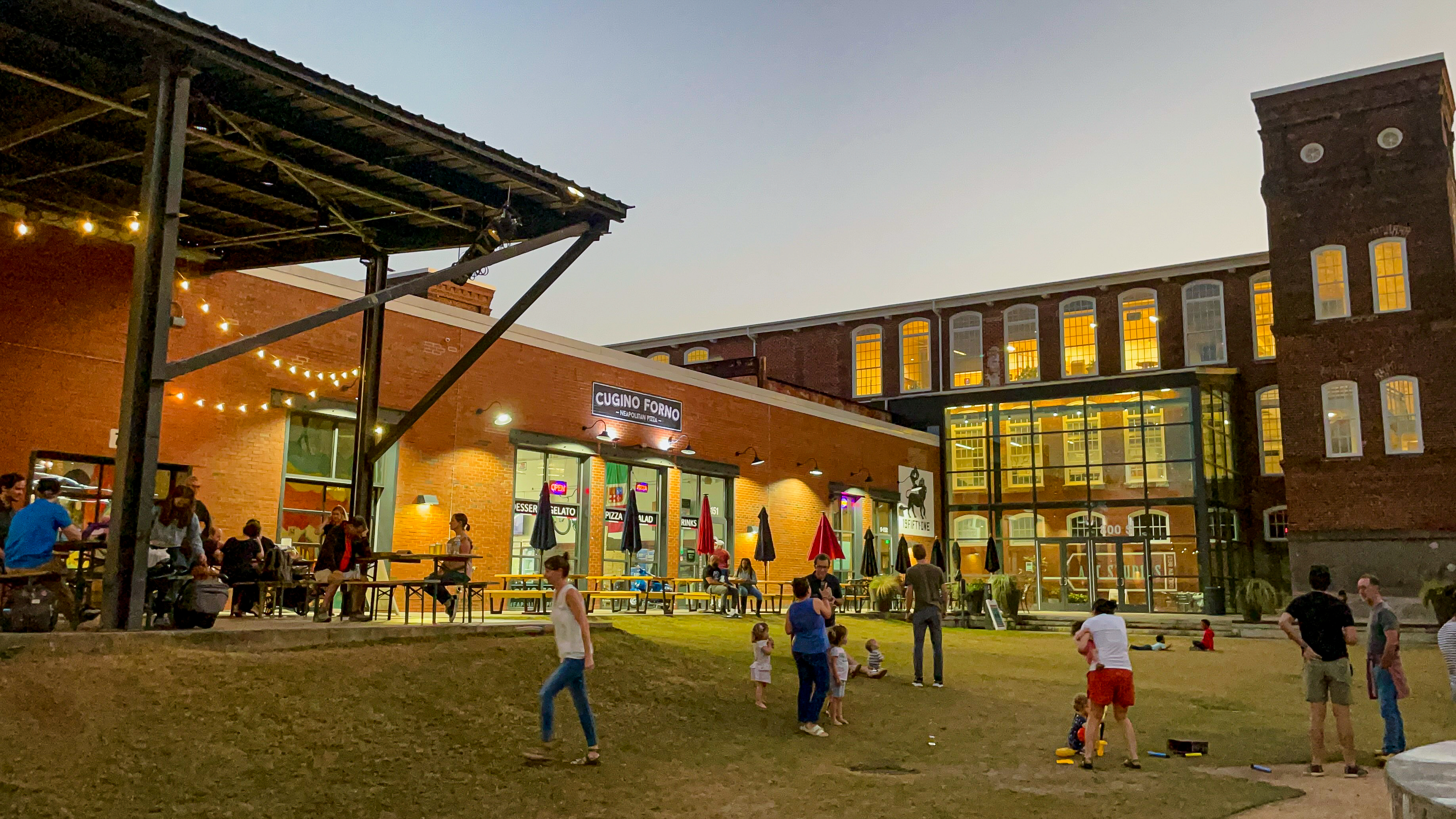
This contrasting shift in scenery and in community is stark, and through this website, I hope to further explore some of the factors that play into creating community by examining Golden Belt Campus.
Specifically, I hope to answer these two main questions:
1. How does architecture influence community/social dynamics and values?
2. How has the redevelopment of Golden Belt Campus impacted/reflected the sense of community in Durham?
Click through the tabs for each page to see my process, research, and analysis from the perspectives of Golden Belt and community artists, the Golden Belt landlord, the architect involved with campus renovation, and a local journalist.
 Deconstructing Durham