Golden Belt Campus is a truly unique space for the arts. Fostering the sense of a creative space was an integral part of its renovation design. I wanted to explore the role of the arts in Durham more, especially since the downtown scene seems to reflect such a big appreciation of them.
“Durham is a very creative place—that’s one of the things that makes Durham special and unique. There are a lot of cultural institutions that call Durham home: the African American Dance Ensemble, the American Dance Festival, the National Museum of Contemporary Art, the Full Frame Film Festival, the Carolina Theater… There’s a lot of culture. There’s a lot of art. There’s a lot of music. There’s a lot in the culinary field… There are just a lot of open, wonderful, creative pockets. You can just be downtown and stumble into iron workers, rappers, street performers, you know, hula hoopers, puppeteers. It’s just a diverse array of creatives that call Durham home.”
Pierce Freelon, founder of Blackspace, Grammy-nominated artist

The arts have such a big importance on the shape of Golden Belt, but from the perspective of the designers. I found myself wondering, what do the artists feel about their contributions? Below are some questions I asked two of Golden Belt’s current artists, Christine Long and Choi Soonja.
Christine Long is a retired nurse, classically trained artist, and fine art restorer who has been a Golden Belt Campus artist since the southern portion of the campus was bought from Durham Housing Authority and renovated for the first time in 2007.
Choi Soonja is a retired nurse and self-taught expressionist oil painter. Much of her work focuses on elements of nature. She has been an artist at Golden Belt Campus since 2020.
Why did you choose to come to Golden Belt over anywhere else? What drew you in?
“That was the only place. There wasn’t any other.” – Christine Long
“There are not many opportunities in Durham for artists where they could actually have studios. We work at the same time, and we have opportunities to do exhibitions. So really, it’s because this is probably the only place to have this great artist space. I think they do have some, but it’s not this.” – Choi Soonja
What do you feel is important about your role as an artist? How do you feel you contribute to or influence the area or other people working here?
“Well, I’ve got a lot of training in the technical aspects of painting to create fine art rather than ‘just design’ art, I call it. And I think, at least, I try to bring excellence to my own work, and I’m always a resource for other folks. I do restoration work for clients as well. So sometimes I’ve shown those paintings, the before and afters, to some of the [artists] here just to point out the mistakes that those artists made and maybe how you could avoid that at this point. And I’m the treasurer as well as being the gallery chair, so I’m trying to deal with all that sort of thing. As a former nurse, I’ve got some of those nurturing skills. Sometimes, I get asked some questions about health.” – Christine Long
“I think we contribute to both. We are artists, but we all love different areas of art. We have sculptures, glass workers, painters, water painters, and even, you know, we have different styles of oil painting. So, I mean, we can influence each other rather than focus on ourselves. I mean, if we wanted to really focus on our work, then we would probably just create it ourselves at home. But being exposed to other styles or other artists or other mediums really helps us think about each other. I think it is kind of cool to have art right in the center of a building. Even in the businesses outside, on their tables, we have our own little cards that let people know that there’s art inside.” – Choi Soonja
These responses contrast with both Justin and John’s statements about the soul of Golden Belt Campus and the importance of having artists in the workspace. When I asked about the impacts that artists had, Christine and Soonja talked about their direct line of work: restorations, commissions, and the tangible resources they provided for others. This variation in opinion showcases the complexities of defining “community impact,” as well as the differences between an entrepreneurial and an artistic mindset. They focus less on how their presence draws other people in and more on how they influence the artwork of their peers and bring in a diverse breadth of perspectives.
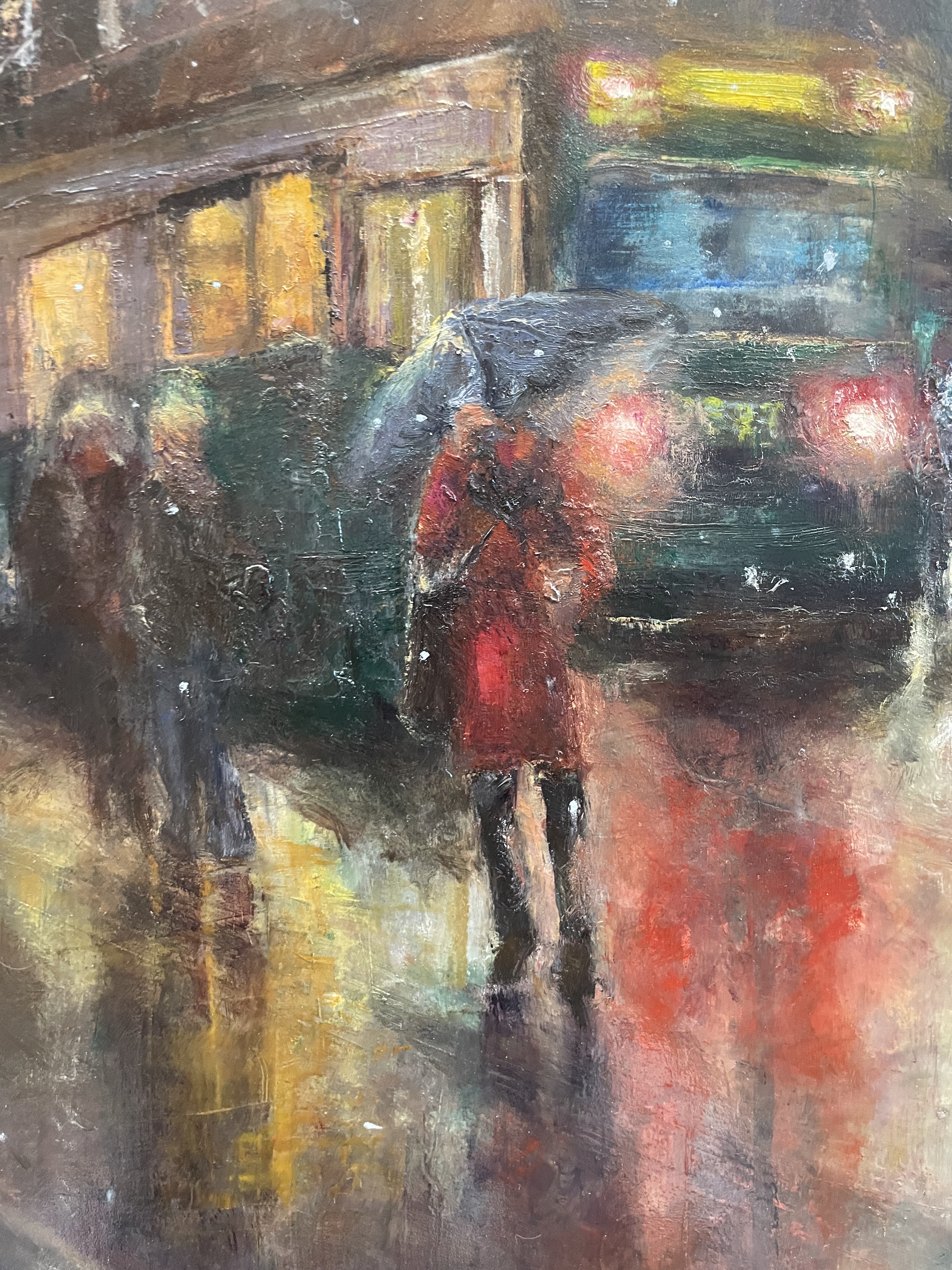
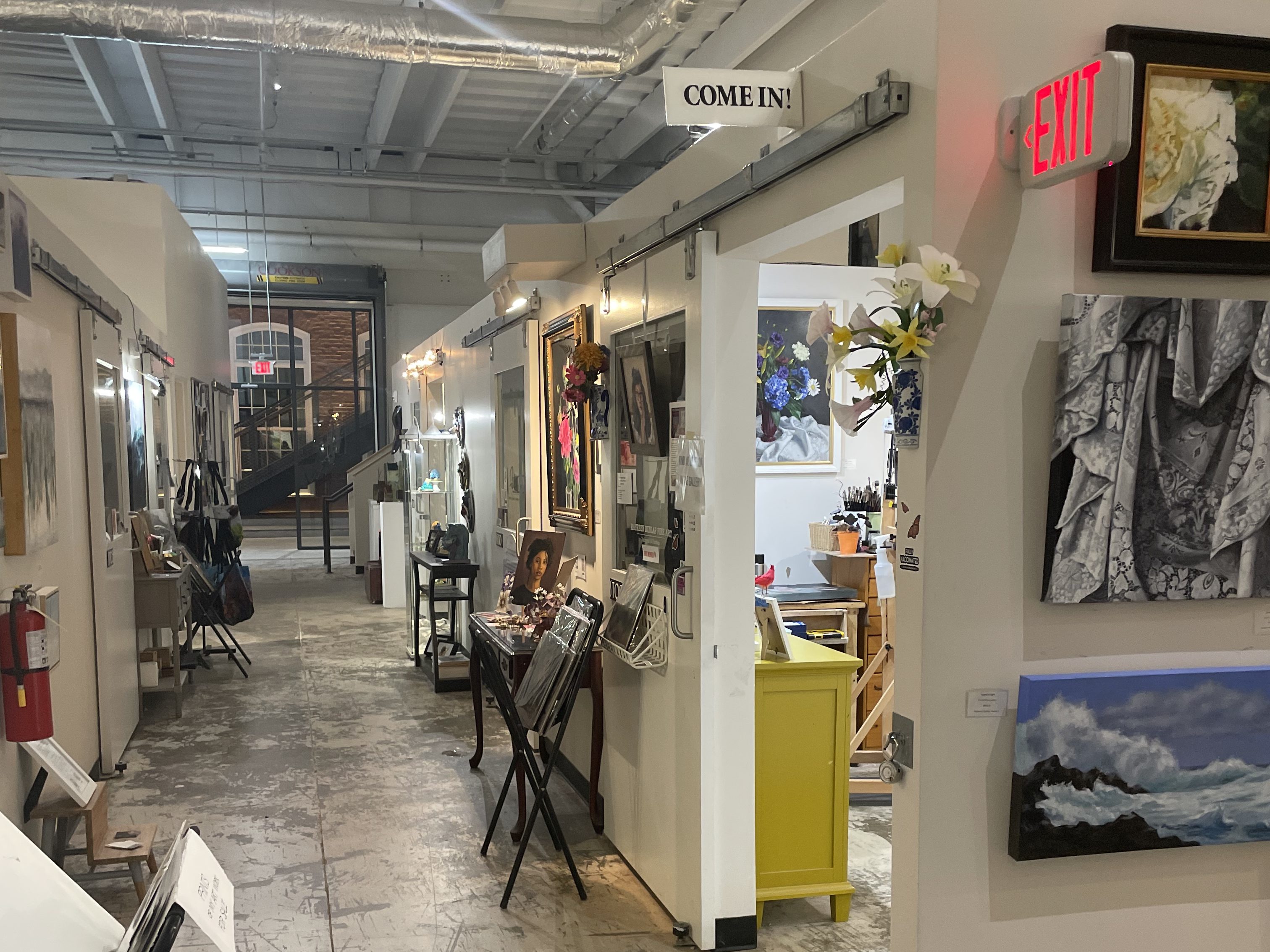
Photos taken by author
Looking beyond just Golden Belt, Pierce Freelon, a lifelong Durham resident, Grammy-nominated musical artist, and a former Durham Councilman, touched on Durham’s unique arts scene due to the city’s history.
How do you feel artists have influenced Durham’s history and usage of space?
“When the tobacco industry fell out of favor with consumers, the artists kind of filled in the gaps to make use of some of those abandoned warehouses. I think that artists and art are resilient. During good economic times and bad, you need art to be able to have a full, thriving, and robust human experience. I think that Durham’s creative community is what helped us rebound so quickly from the collapse of the tobacco industry. It’s something that has helped keep the cultural legacies of different ethnic groups kind of alive and thriving despite different harsh economic and policy challenges that have had negative impacts. I will say specifically the African American community with the development of the freeway and the Hayti community, it’s the artistic institutions that are still standing, still telling the stories of, and still celebrating the legacies of Durham’s proud history of black excellence in entrepreneurship. I think art has been really important as an economic driver and kind of cultural preservation tool.”
– Pierce Freelon
How do you feel this unique culture and history of the arts scene you speak of influenced the city? What are some opinions on this influence?
“There’s a lot to it. Entrepreneurship and healthcare are two important tenants, but I think art and culture are some of the biggest ones. A couple of years ago, I was in Chengdu, China, talking at a conference about music and cities and how Durham is such a special place, and there are cities around the world, from China to different countries in South America, and other places in the United States, that are looking to Durham to try to figure out, ‘how are you able to grow? How are you able to pivot? How are you able to be so resilient and so attractive to so many people?’ They’re kind of studying our playbook. I think Durham is a really good example of how to grow in ways that you celebrate while also preserving the roots and bones of what makes a place really special. Now, that hasn’t been without controversy; there definitely have been a lot of issues around gentrification and affordable housing that threatened to lose some of what we’ve been able to build and maintain. But, right now, we see that everywhere.”
– Pierce Freelon
 Deconstructing Durham