While conducting research on Golden Belt’s presence, I also ran into the questions of community outreach— even with the artists’ presence, how do they reach out and connect with the people around them?
Golden Belt’s website has a designated calendar tab that showcases its events. As of recently, involvement with local organizations and schools, such as the North Carolina School of Science and Math (NCSSM) have been the main sources of drawing people in to the space. Still, I decided to ask some of the local artists about how they gained community engagement.
How did you reach out to the community to get them to come to Golden Belt, or was this a natural process?
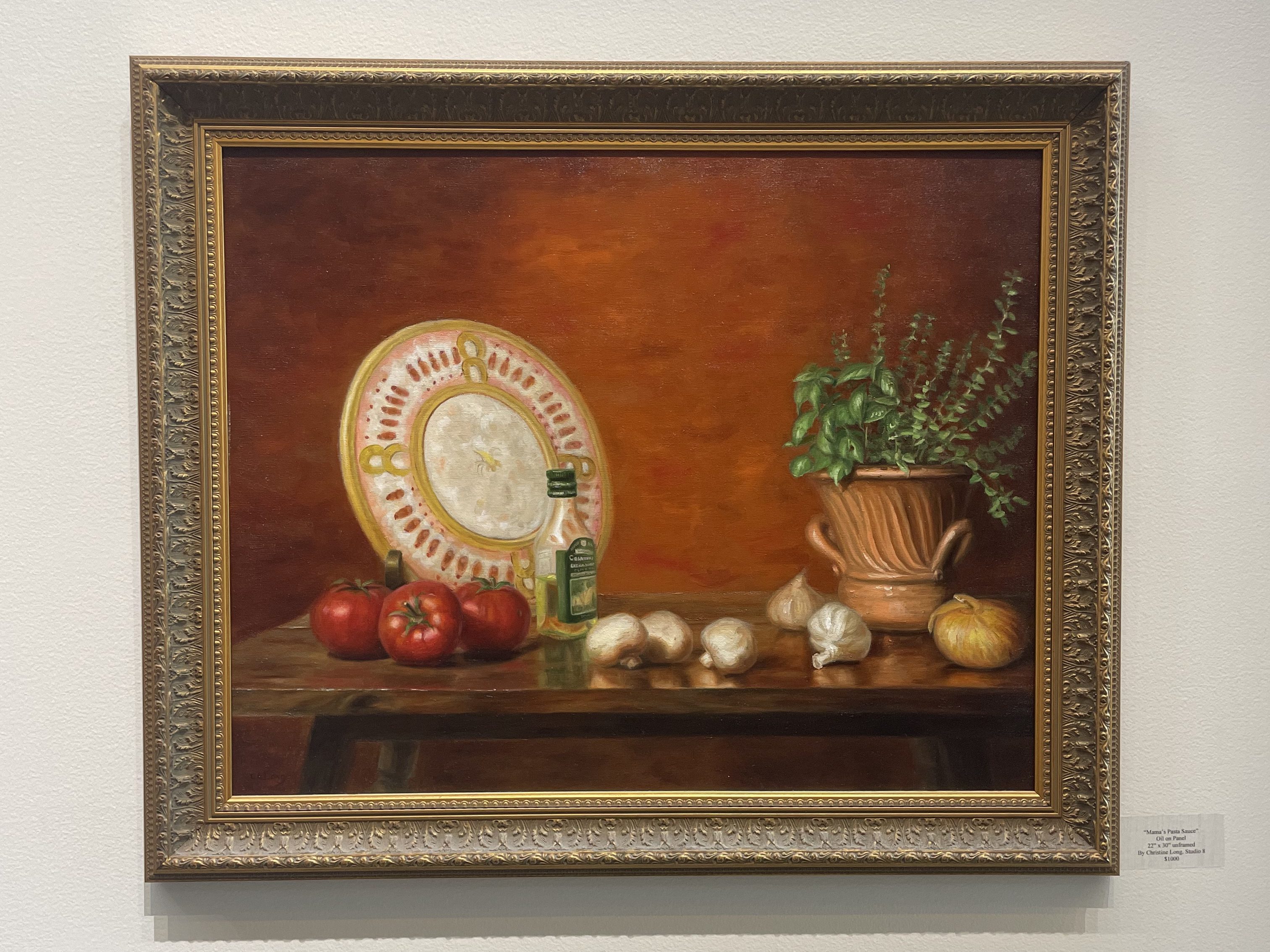
What we have done in the last couple of years is reach out to the community and have community groups come in to have their shows for an entire month in our gallery and usually the classroom as well. That’s brought in about a thousand people each time, which has been wonderful. Last spring, we had the Fine Art League of Carey have a month-long show. There I think about 80 pieces that they brought, which were of fabulous quality. This year, we’ve so far only scheduled community art showings. We also had Juneteenth, where we invited black artists to join our black artists here. That’s kind of gotten a lot more of the word out. And we’ve also had the Holiday Market, which is in that huge big hall, the Grand Gallery we call it, for the last three Novembers, and we’ve got a large audience each time. We spent a lot of money advertising it because we had some revenue from the shows that we had. We charged them a small fee to enter.
Question from the author: So is that all you guys working on it?
Just us. We now have pretty active committees. I’m the chair of the gallery committee. So we prep the galleries, hang the shows, and make the labels for the art and stuff. Then we have a group that does advertising, a group that does social outreach, and a group that does sort of the keeping up of the facility itself. We have a pop-up group that sort of does some events and brings in artists from outside. It gives them exposure.
– Christine Long
Beyond just community outreach from the part of the artists and from Golden Belt, however, Barry Yeoman, a lifelong Durham resident near the downtown area and freelance journalist, makes an important note about his experiences with community programming in Durham.
How did the renovators of Golden Belt take into account community input on the project? Did you consider gentrification in the renovation process?
“I always felt that in American life, there is this lack of community scene, and I found myself seeking it out to varying degrees of success. After Fullsteam Brewery opened, there were several years where my friends and I would gather there every Wednesday at 5:30. It became a routine—everyone knew where I’d be. But eventually, the runners started coming to Fullsteam on Wednesdays, and my friends didn’t enjoy it as much because it got crowded and noisy, and, well, the runners were sweaty. That tradition faded away.
Later, the Durham Food Co-op started hosting Meatless Mondays, and I have a lot of vegan friends, so we’d all gather there. We’d sit at a long table outside, and sometimes someone would bring their cello, and there’d be music. It was wonderful. But that, too, ended with the pandemic and was never revitalized. The Co-op also used to host $3 dinners every Thursday, and hundreds of people would attend. That ended with the pandemic as well.
These days, my neighborhood has a running club that meets every Wednesday. Afterward, we gather on someone’s porch, and that’s become a new ritual. I think it’s easier to create these types of traditions now because the city’s infrastructure has developed so much over the past 13 or 14 years. Even people who didn’t realize they wanted this kind of connectivity are seeing how lovely it is to have more outdoor spaces, more public indoor spaces, a walkable environment, and a city built densely enough that everything is close by.
For example, I have friends in L.A. who tell me that going anywhere takes 45 minutes. That’s not true in Durham. I sometimes get frustrated driving here because I can’t even finish three songs on a car trip—by the end of the second song, I’ve arrived. Even if I’m going to South Durham, it’s quick. That kind of proximity really helps create a connected city.”
– Barry Yeoman
Do you feel Durham has any defining or unique characteristics that shape its community?
“Durham tends to mount a more socially minded response than a lot of other places. While many regions were fighting out the whole tired debate over masks, social distancing, and staying home, for example, I didn’t see any such fight over that in Durham. Mayor Schull, at the time, issued a stay-at-home order very early on. There was virtually no debate over it, and businesses complied; I saw nearly no resistance, which speaks to two things. One is that we trust science, but the other is that we are a socially minded city. We care about each other’s welfare, and we value the larger social welfare over this very narrow vision of individual rights.”
– Barry Yeoman
One rising concern about architectural/urban development in Durham from community members has been gentrification and its effects on low-income demographics. This is something I thus asked Justin about, and I made a notable observation. These are his answers to some of the questions I posed:
How did the renovators of Golden Belt take into account community input on the project? Did you consider gentrification in the renovation process?
“When we started the development, one of the things that we were really trying to have our ears open on was the concept of gentrification. At Golden Belt, we have some things that are, gentrifying the area. There are Durham Housing Authority projects here and there— on two sides of us. There are some redevelopment projects, such as the Liberty Apartments, which will be more mixed-income, but it will still have some low-income housing available. The number of low-income units will not go down, but other income brackets will be brought in.
Near here, these are all single-family homes, so people were really worried that we were going to build [Golden Belt] and housing values would go through the roof. Well, housing values were already going up over here. This is a neighborhood that’s very close to downtown. The houses were at a sort of base point that was affordable for a lot of other developers, so if you knew how, you could get a house for pretty cheap and fix it up to sell for more. That was kind of happening with or without us. Ultimately, we did a lot of listening sessions with the neighborhood. The concerns that we heard were: ‘Are you going to have minority home businesses here? Are you going to have local businesses here? And is this going to be for everybody?’ So we really tried hard to hit marks on all of those things.
I think [gentrification] is an unintended side effect, but I think you have to sort of weigh the costs and the benefits, right? What would happen to this neighborhood if this building just continued to decay? What good comes of that? There’s no job creation. This is now sort of a center for recreation in an area that didn’t really have one before. And I get it; not everybody can afford the ice cream, but I think it’s still, by far, done more good than harm with regards to creating a resource for the community, creating a place for jobs, and creating a space for artists especially. I mean, that’s been huge.”
– Justin Sacco
And a similar stance from the architect, John Warasila:
How did you take into account community input on different projects? Do you consider gentrification in the process?
“In downtown, talking about gentrification is an odd thing to say. I mean, for starters, gentrification is something that’s thrown around so much. And when you look, what’s the alternative? Like you just let buildings sit and rot. No one does anything, and the prices still go up. I get the impacts, but at the same time, the flip side of that is you do nothing. I think there’s a much bigger issue than gentrification going on in this country between haves and have-nots. And that is toxic and probably dangerous to us as a society in total, you know. And you know, I think I love that [Austin Lawrence] had the vision of why Durham can’t have a New York quality building, you know?
Before that, the only building downtown had that was new and big was the jail. I had a professor in college who said, “if you want to look at what a society values, look at the buildings they built.””
– John Warasila
How does architecture reflect community and social dynamics and values?
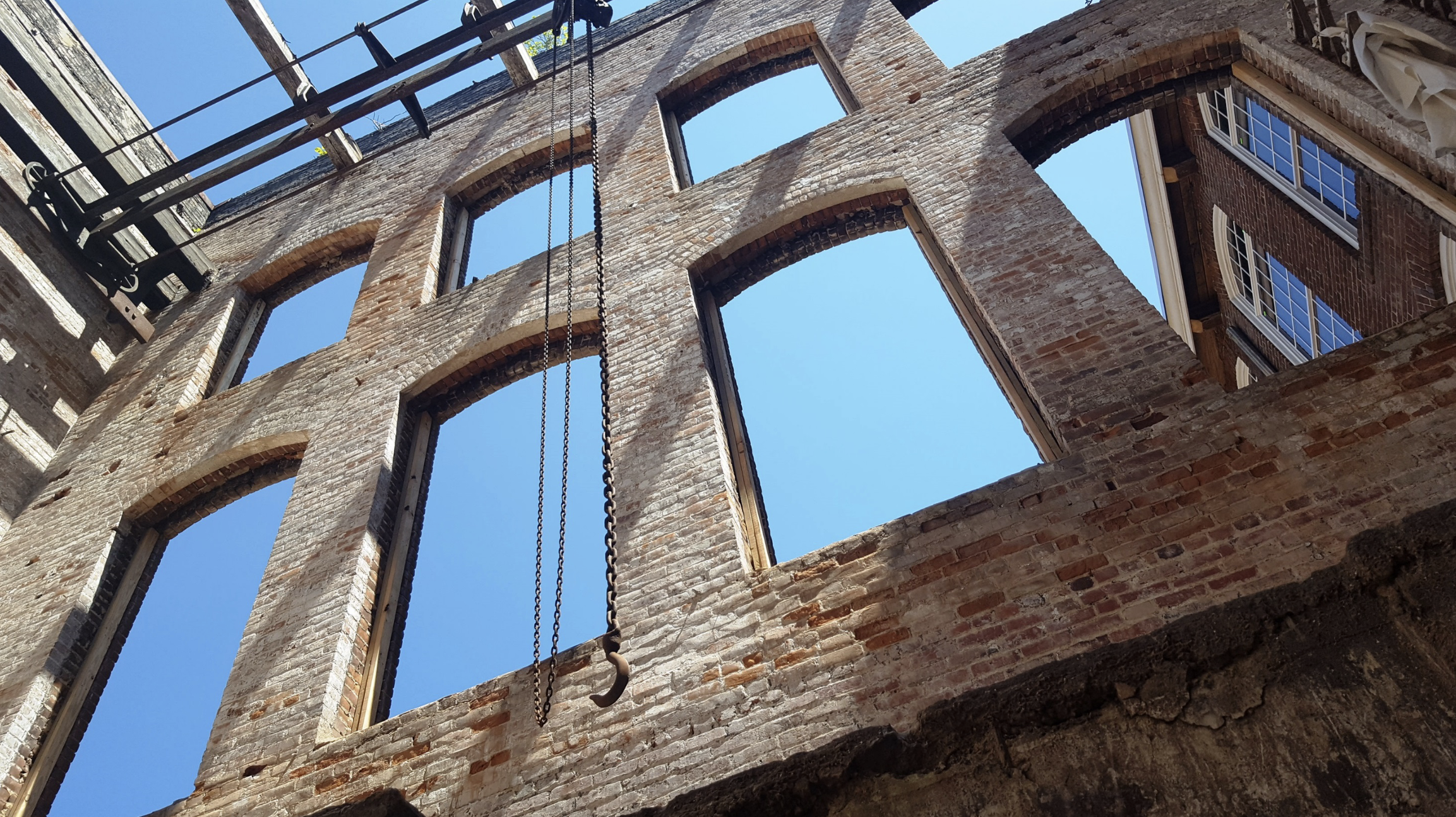
Golden Belt was renovated by members of the Durham community for members of the Durham community. John Warasila and Justin Sacco, while still business owners and entrepreneurs, still live in the area to this day. Rather than other developers who come in with the intention of bringing growth to Durham the focus has always been on the community at Golden Belt, from the beginning to the end. This focus on both social and urban growth is what makes Durham’s infrastructure and community so strong and unique.
Architecture has the power to transform not only spaces themselves but the attitudes around them. Durham had been historically dubbed a troubled or even dangerous city— this has since drastically shifted.
John gives an example: “I think of it as, if you drop this pebble in this pond, it’s going to ripple out, right? So what we do here has to be very conscious of what it’s rippling out into. If you look at a map of Golden Belt and that side of town, you’ll see there’s a pretty big grid system of streets, and they all flow into the campus. So what’s really important about that campus is that it flows in and out of the neighborhood.”
 Deconstructing Durham